When booking the trip, we had a quick look at a train transfer between Dehli and Varanasi. We’d watched a few videos and quickly decided to fly there. Our flights were booked with Indigo, which appeared to be the Indian version of Easyjet. Whilst booking the flights, we also decided to do a quick couple of nights to Amritsar and it was easier to book the flights to coincide with each other. Despite being sceptical of the airport process and airline, it was pretty straightforward.
Fortunately our guide in Varanasi had arrange for a taxi to collect us at the airport and took us to the closest road to our hotel. We had opted to stay in the “old district” of the city, where there are no roads, just narrow alleys. The hotel provided a porter to meet us at the drop off point and escort us to the hotel on foot and carry our luggage. As we knew this in advance, we travelled really light with just a small carry on each, no way would we have negotiated it with all our luggage. Hotel was very traditional, no frills, a little tired around the edges, however it was clean, had a hot shower and the staff were very kind and helpful, nothing too much trouble for them.
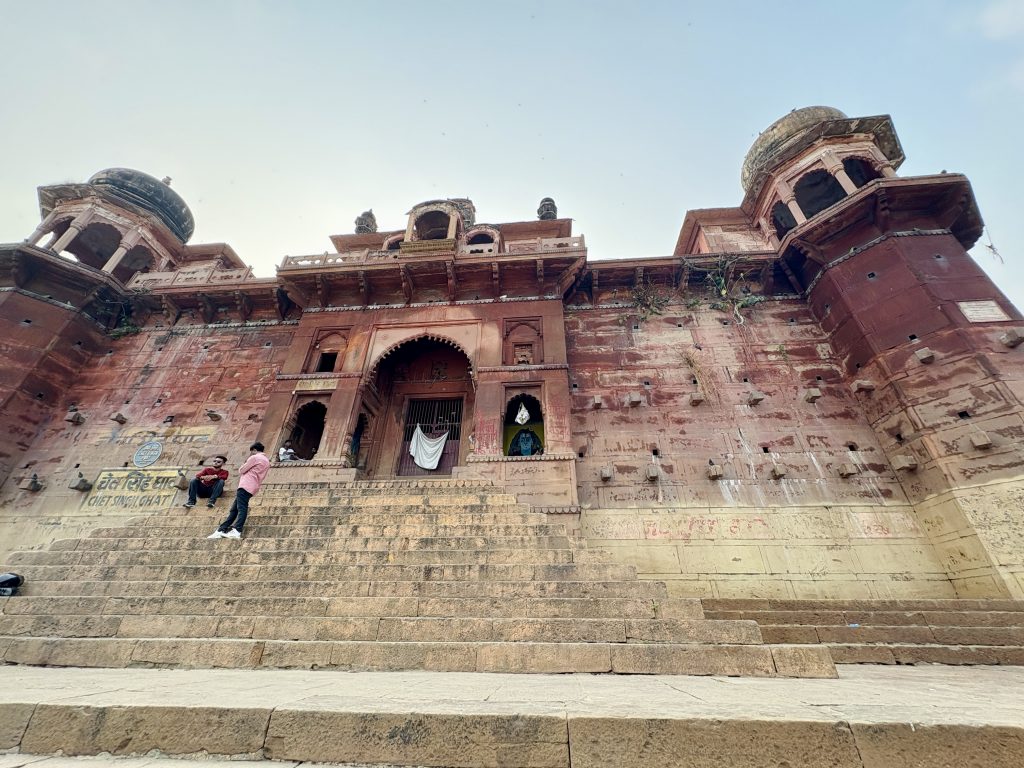
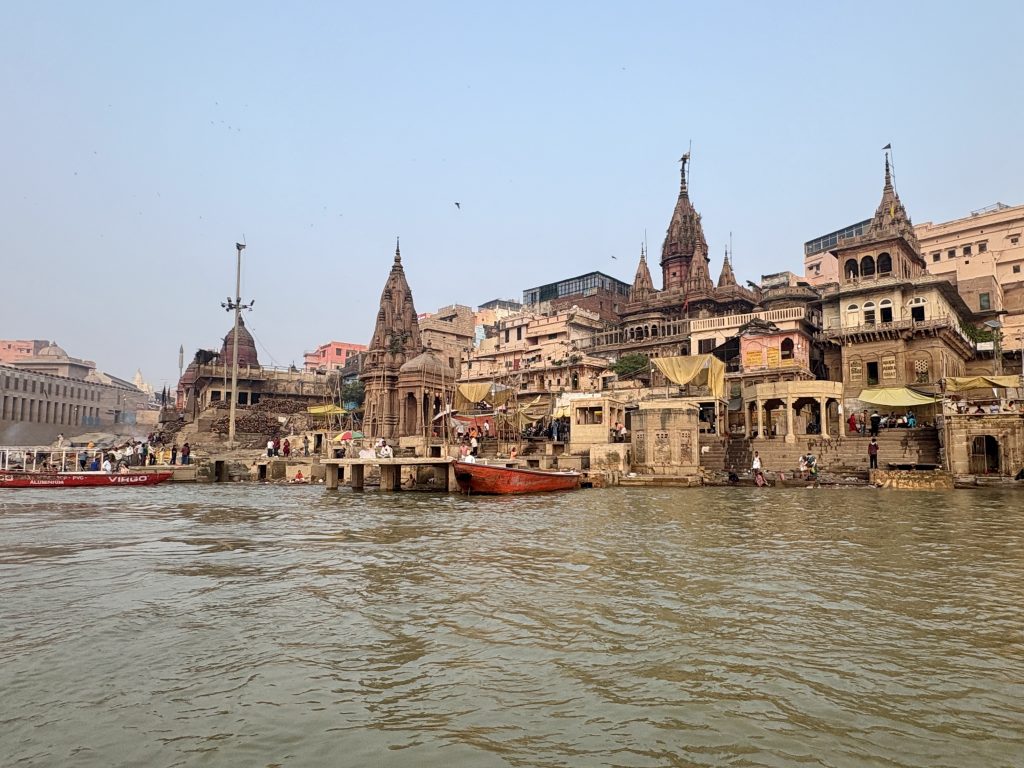
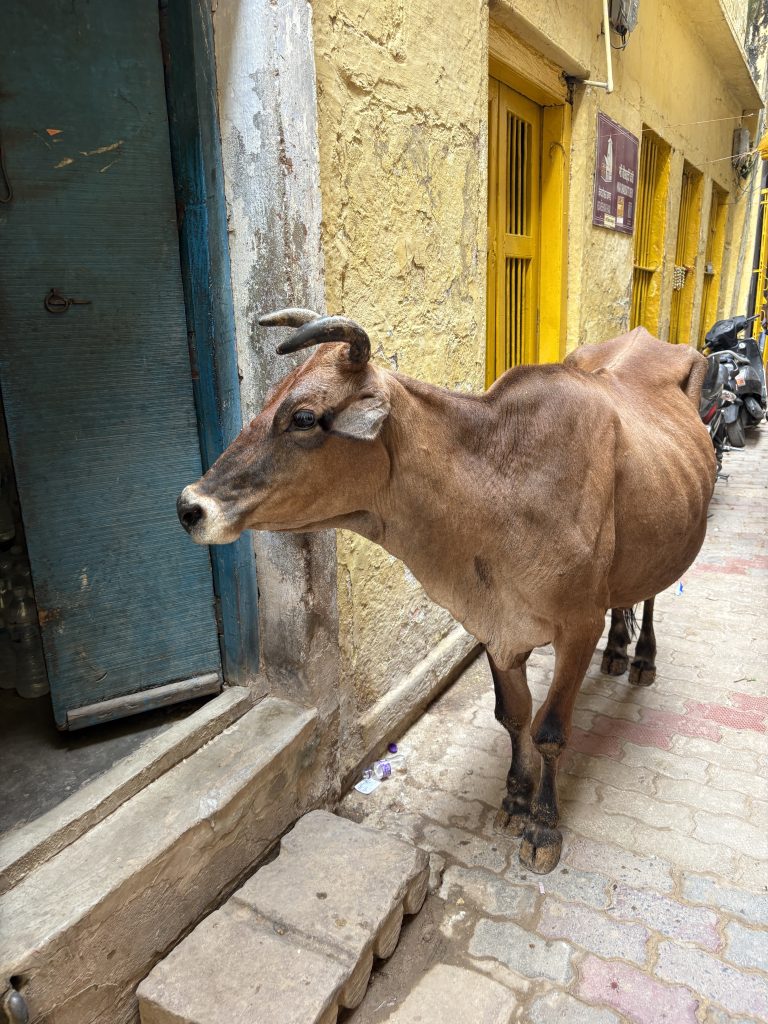
Day 1 Varanasi – We met Jyoti, our female guide for the next two days and threw ourselves right in to Varanasi. We spent the day exploring the streets, temples and ghats! We visited the first of two cremation ghats, Maharaja Harishchandr. Jyoti explained fully the process and why Indians choose to come to Varanasi to die and be cremated by the side of the Ganges. One thing that surprised us was the animals just wandering around the ghat! Dogs, goats and even a sheep pushed past us. We were under the impression that all the ashes are scattered on the Ganges, however this is not the case, the family take some, a small amount scattered and apparently the government deal with the rest, we imagined where they’d end up. A chaotic Tuk Tuk ride to the biggest university complex, where we had a look around the public grounds and the temple before enjoying a cup of lassi (yoghurt, water & spices) and a samosa with a spicy dip.
We then headed back to the Ghats and strolled along the Ganges taking in the sights and sounds.
Stopped off at an Italian restaurant, which was founded back in 1992 by an Italian and was the first one in India. Jyoti joined us for lunch and we had the most delicious pasta and pizza.
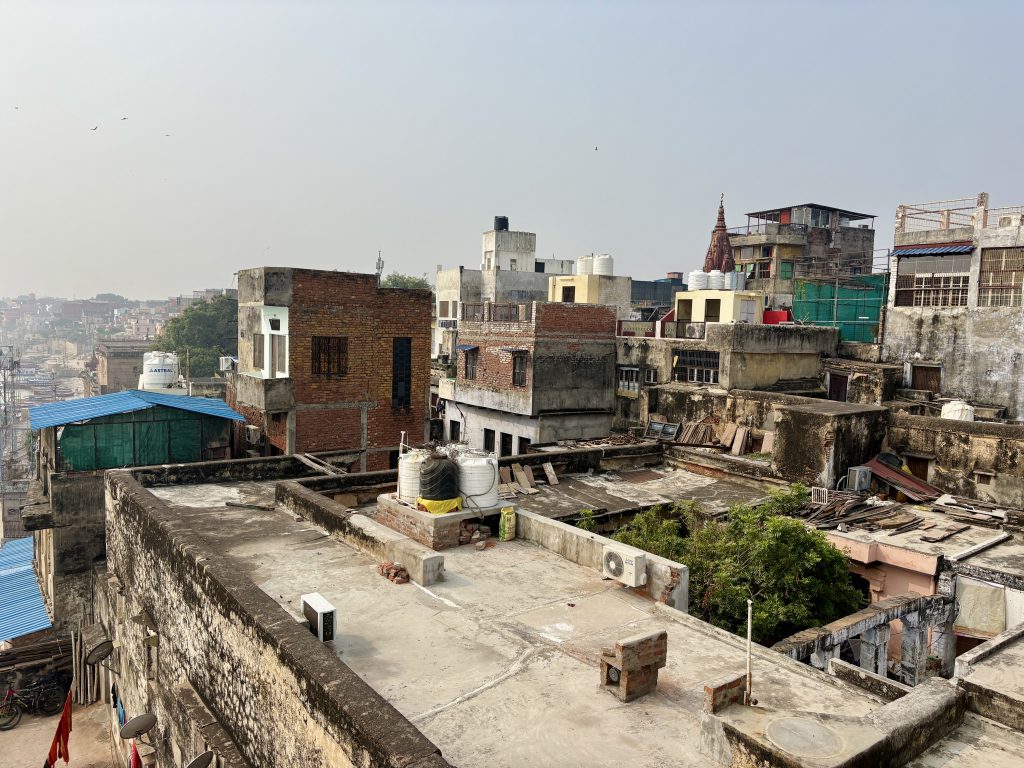
We continued to walk along the river, just watching everyday life of the locals and despite our reservations, we had very little hassle. We headed back to the hotel and enjoyed a quiet evening sat on the rooftop terrace enjoying a few drinks and watching the boats sailing by. Early’ish night as the alarm was set for 4am the next morning.
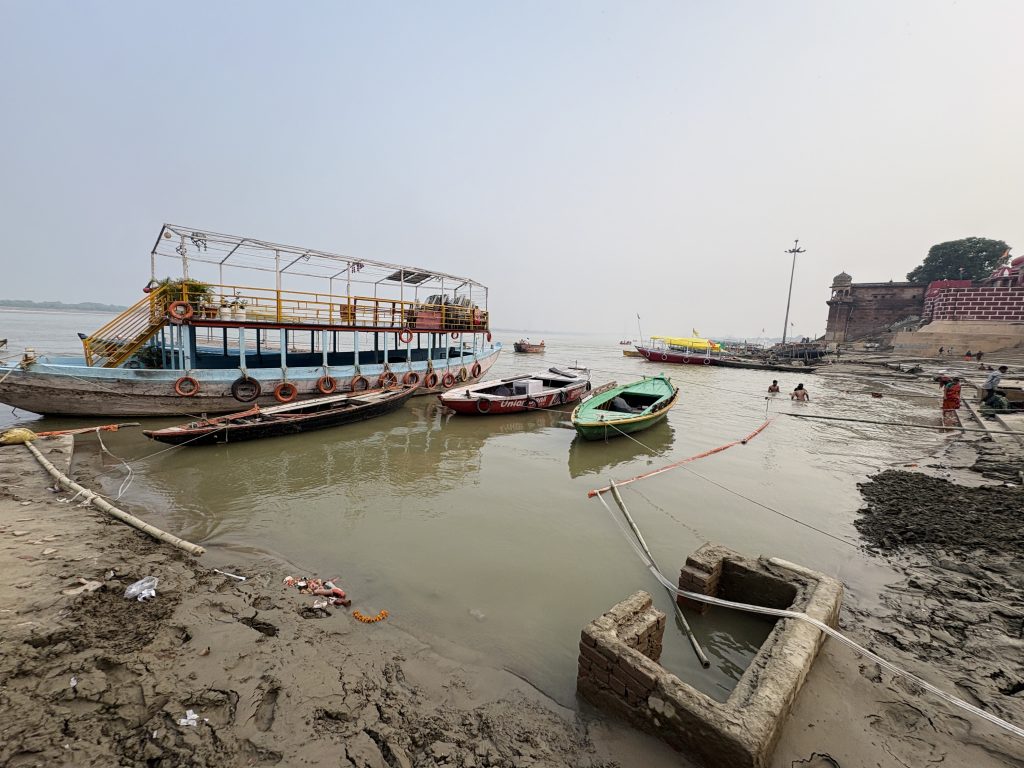
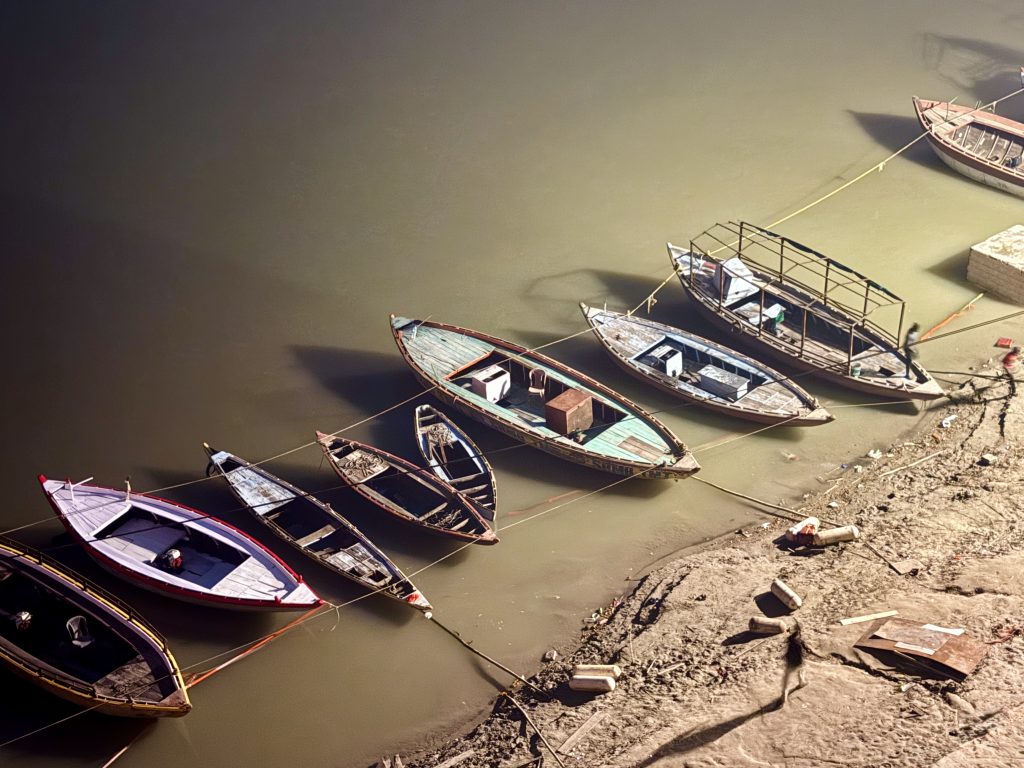
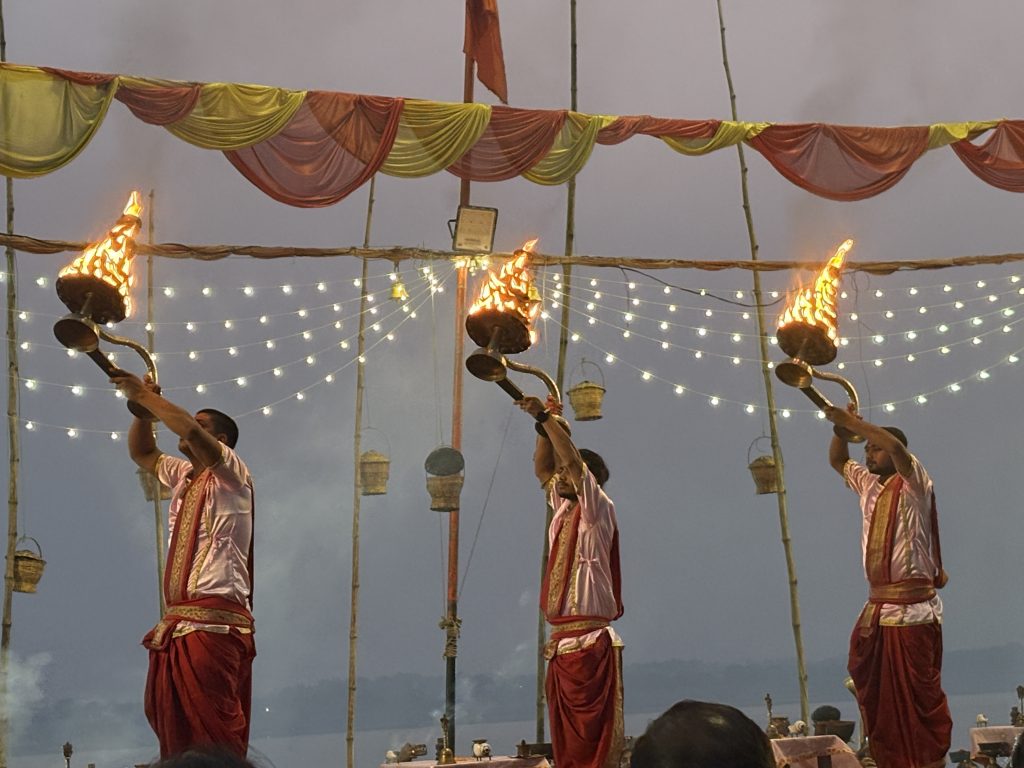
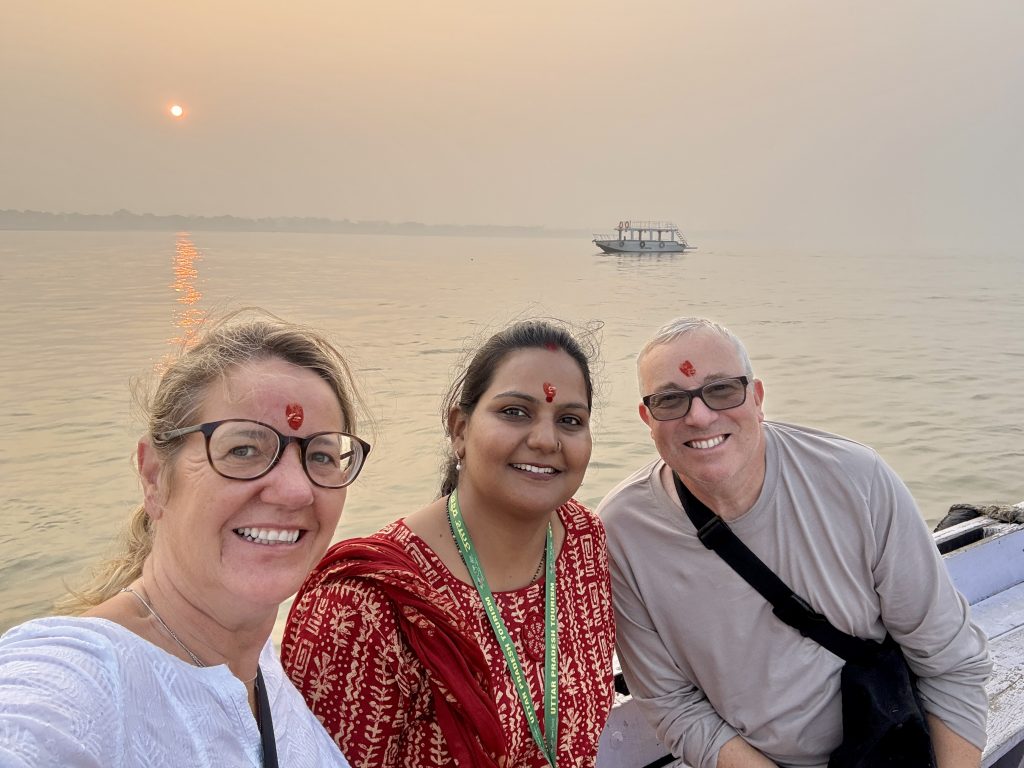
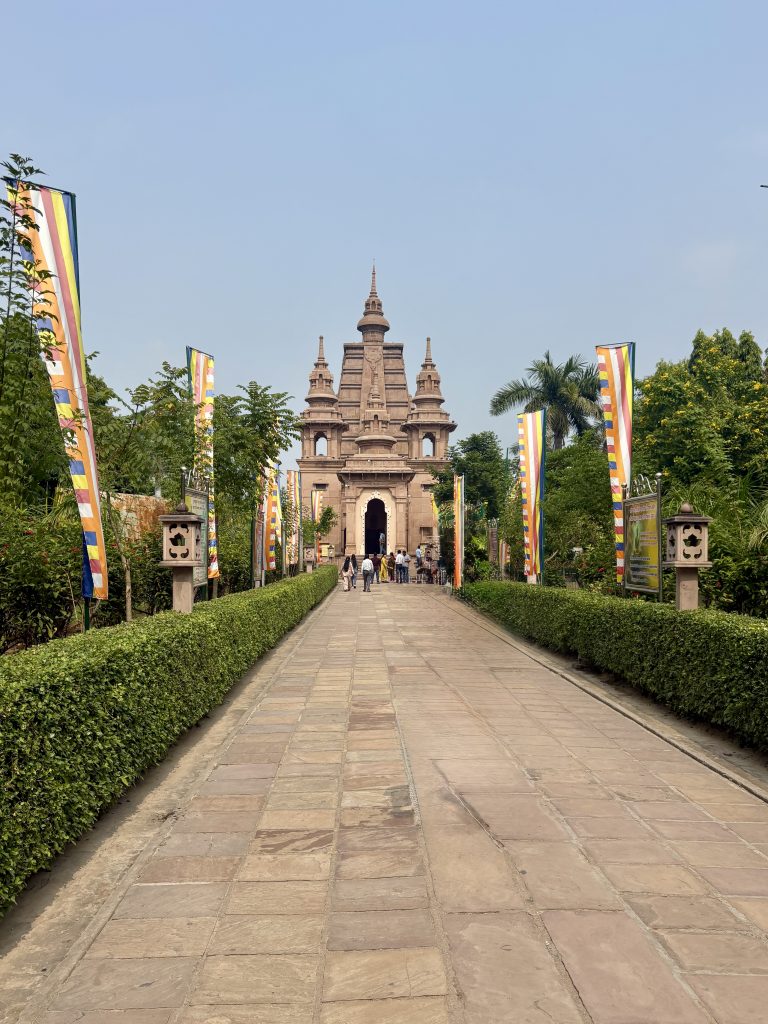
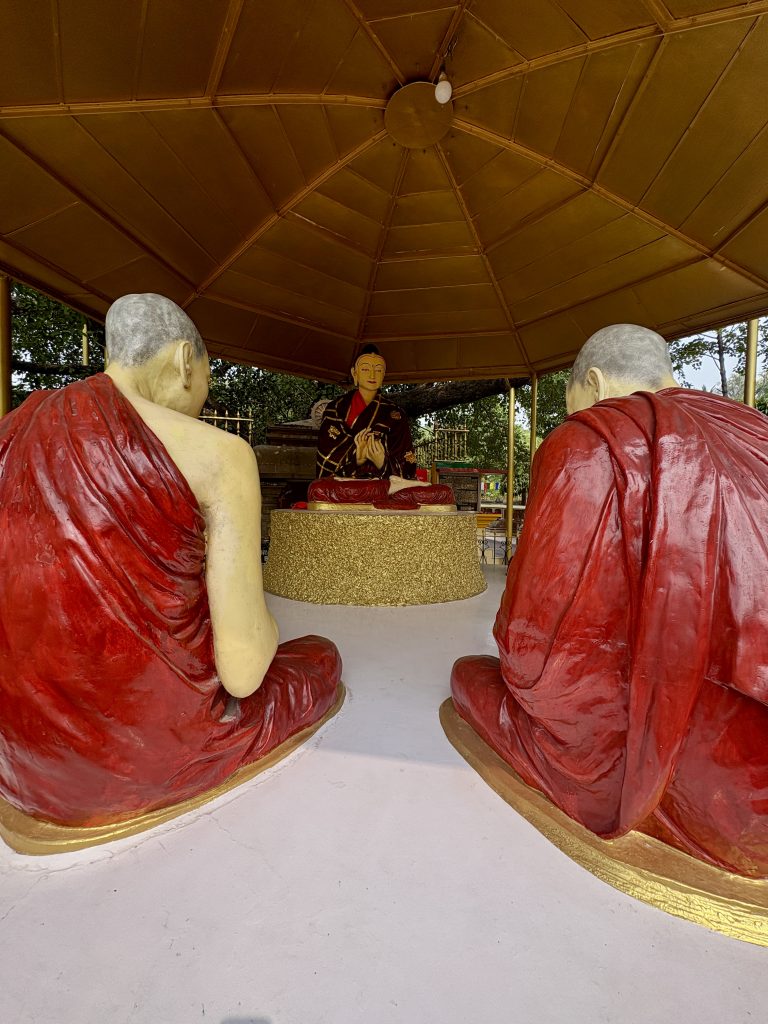
Day 2 Varanasi – Early alarm call as we were heading to the Assi Ghat for the morning Arti Subah – e – Banaras – to celebrate the morning and the Ganges. The day before Jyoti has asked if we wished to partake in one of the ceremonies lead by a local school for girls, celebrating young women and their empowerment. To take part, we had to promise Jyoti (who in turn had to confirm to the teacher) that we would take a shower in the hotel before we left. At first when she was telling us about showering, we both thought we’d have to do in in the Ganges! It was a lovely experience and we were made most welcome, both slightly worried that we’d do something wrong, however we followed the lead of the others. What an experience. We sat down for a few minutes and had a chai latte to wake us up before wandering down to catch a boat for a trip down the Ganges. The sun had risen and it pretty peaceful, despite the amount of boats on the river. We cruised for a short while, then the crew cut the engine for us to admire Varanasi from the water, Jyoti had charted the boat just for us, so we were able to get the best viewing/photos spots. All too soon we were dropped off close to the holiest cremation Ghat on the Ganges – the Manikarnika. It had a different feel to the one we had visited previously, piled high with wood and stalls selling all manner of supplies for the families to purchase for the cremation. It has a very distinct smell and we stood a respectable distance away from the families and pyres. We then started to walk up the lane away from the ghat, this lane is used to transport the bodies down. A male family member has to carry them, almost half a mile over their shoulder. M was glad that we avoided a person on their final journey. Jyoti lead us to a small door within a bigger door and we found ourselves at the Shri Satua Baba Ashram Mandir, a spiritual centre and provides a place for learning, teaching Sanskrit & Vedas to boys. Enrolled between the ages of six to twelve and are totally self sufficient from the point they join. We watched the morning prayer and rituals before moving on. The next thing we know we are sat in a shop of religious paraphernalia, waiting for the priest from the Kashi Vishwanath Temple to process our application to visit the temple. Our passports and £9.40 were needed to gain entry and fast track the four to five hour queue of devotees. We both had no clue what was happening, however we bought a medium sized offering to take with us. The priest returned with our authorisations and we had to almost run after him down the narrow streets to the temple to keep up with him. It was chaotic and still we had no idea what was happening. We eventually got to the smallish queue with our fast track passes and noted that the Hindu’s were literally glimpsing into the temple then being manhandled out of the way, to ensure the queue moved as possible. By the time we got to the temple “window” we looked, G threw in the offering and moved on quickly. We were stopped and both had a garland put around our necks. Apparently we had been blessed by god. The priest then ushered us through the temple, pointing out things and again we were clueless. We were deposited back to Jyoti in record time. The priest then hung around for a tip (of course). Walked back through the narrow lanes and local fruit market, with the constant beeping of horns ringing in our ears. We picked up a taxi and drove out to the Buddhist temple at Sarnath, which is one of eight important pilgrimage sites for Buddhists, it was here the Buddha gave his first teachings to his original five disciples in 528BCE. Inside the temple are paintings depicting the story of Buddha’s life. Around the temple are gardens/grounds with food stalls. We tried the sliced cucumber with black pepper and salt, a take on Bombay mix, wrapped in newspaper with a “spoon” made from a square of cardboard, all washed down with a freshly squeezed sugar cane drink with a touch of salt. By this time we had been on the go for ten hours and the temperatures rising, we opted to say goodbye to Jyoti and head back to the hotel. We’d spent two fabulous, full on days with her in Varanasi and we couldn’t have chosen better. That evening we ate on the roof terrace at the hotel, with our server “The Boss” standing by with a catapult to deter the local monkey troupe. The catapult has never been used, they see it and move on. Next stop Amritsar, via Delhi.
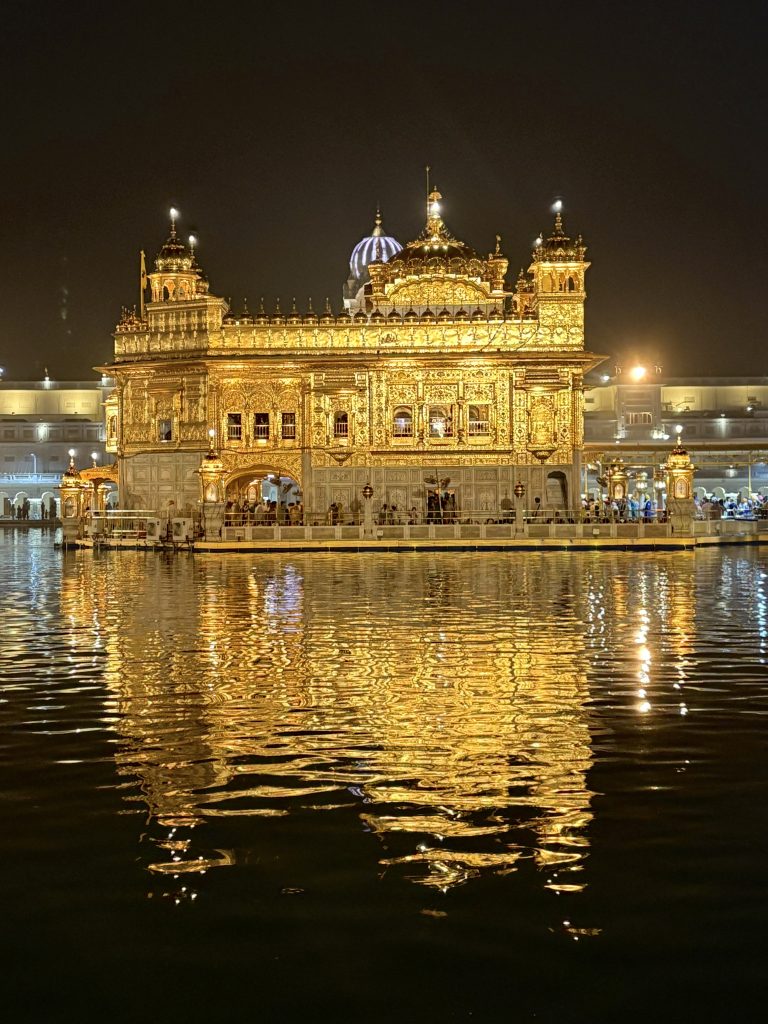
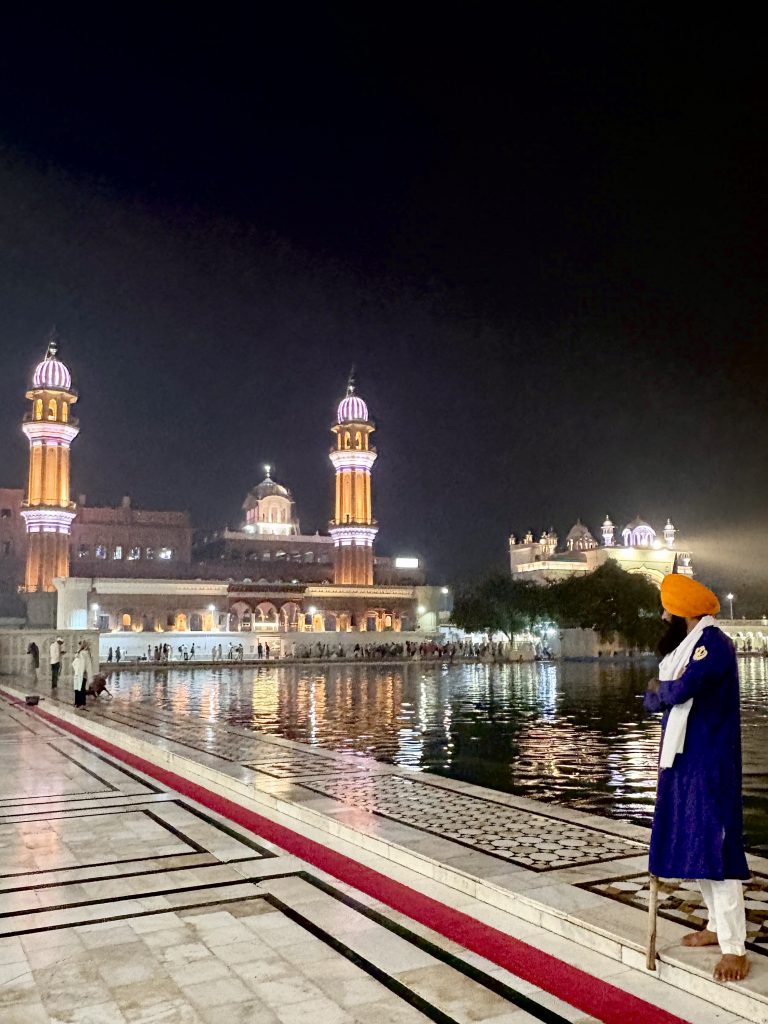
Varanasi to Amritsar was a long drawn out journey, we had to catch a flight back to Delhi, a couple of hours layover at the airport then a short forty five minute flight. Arrived at the hotel and had something to eat, we didn’t have long until we were getting up. Alarm set for 3.15am, our “Adventure Captain” Ram was meeting us at 4am. First on the agenda was the Golden Temple. This was our main reason for travelling to the city. Ram explained the history of the Sikh religion and the temple, before we entered and saw it for the first time. It look spectacular! It became clear why we had arrived so early, we were going to watch the Prakash ceremony, this marks the “awakening” of the Guru Granth Sahib. The scripture is ceremonially taken to the Harmandir Sahib (Golden Temple). What a ceremony and we had almost a front row view.
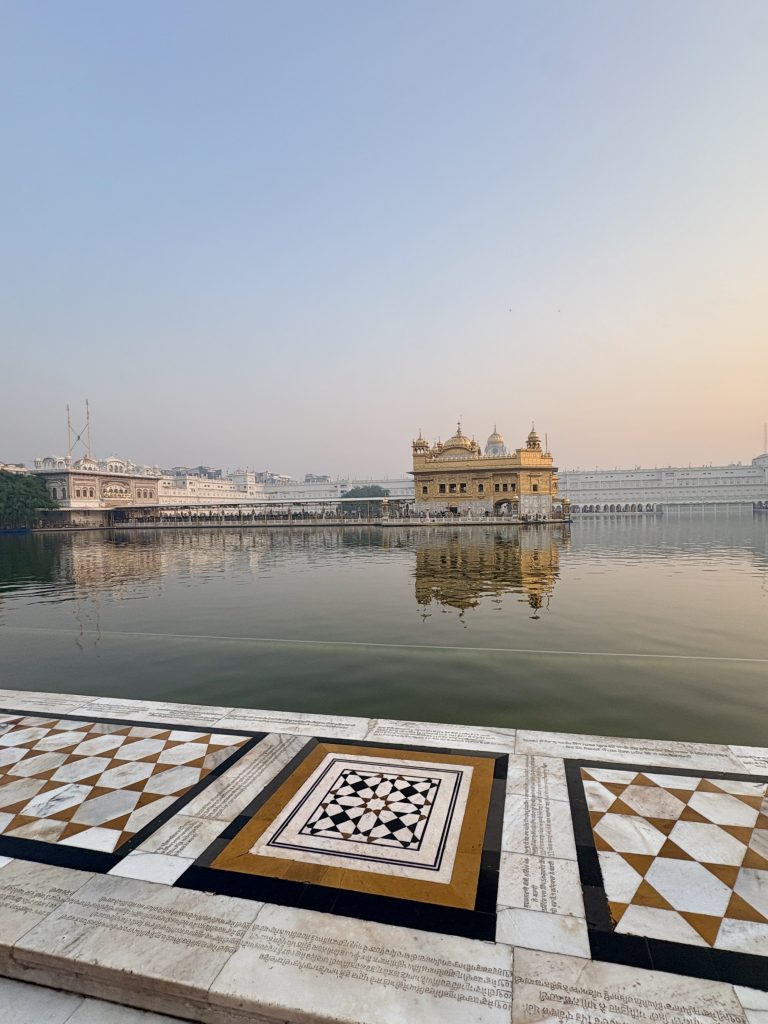
When planning G had mentioned wanting to visit the community kitchen at the temple. The kitchen feeds over 100,000 people a day and apart from the chefs, everything else is done by volunteers. The tour of the temple is done in a clockwise direction. The Ramgarhia Bunga is a red sandstone building at one end of the palace and houses the pillars and a slab that were brought from the Red Fort in Dehli after the war in 1783. Nobody else was there and had a birds eye view of the temple. Just behind was the Langar (Community Kitchen) which resembled an old factory. We were able to access all the kitchens, food prep areas, stores and the dining hall. It’s like a well oiled machine with hundreds of volunteers, even so early in the morning. We spent a almost forty five minutes walking through and taking everything in. At the end of the tour Ram asked if we wanted to eat something, G took the opportunity and we sat on the floor in the dining hall, whilst he enjoyed a meal consisting of curry, rice, chapati and a sweet rice pudding to finish. It’s probably the earliest he’s ever eaten a curry. By the time we’d completed our tour, it was daylight outside and the view of the temple looked different. We watched the devoted Sikh’s taking a dip in the pool (Amrit Sarovar) also known as the Pool of Nectar. It’s a central feature of the site and is surrounded by a marble path with a bridge over to the temple’s sanctum. The water is considered to have healing powers. A short walk away from the temple is the Jallianwala Bagh Memorial and garden, dedicated to the victims on the 1919 massacre where over 1,600 round of ammunition were fired on the orders of General Dyer. The plaque reads – This site is saturated with the blood of thousands of Indian patriots who were martyred in a nonviolent struggle to free India from British domination. General Dyer of the British army opened fire here on unarmed people. Jallianwala Bagh is thus an everlasting symbol of non-violent & peaceful struggle for the freedom of India. On a slightly more cheerful note, we headed off for breakfast at a local cafe. We enjoyed the local breakfast speciality of Kulcha, a soft flatbread served with chickpea curry and a spicy dip. All washed down with a cup of Lassi.
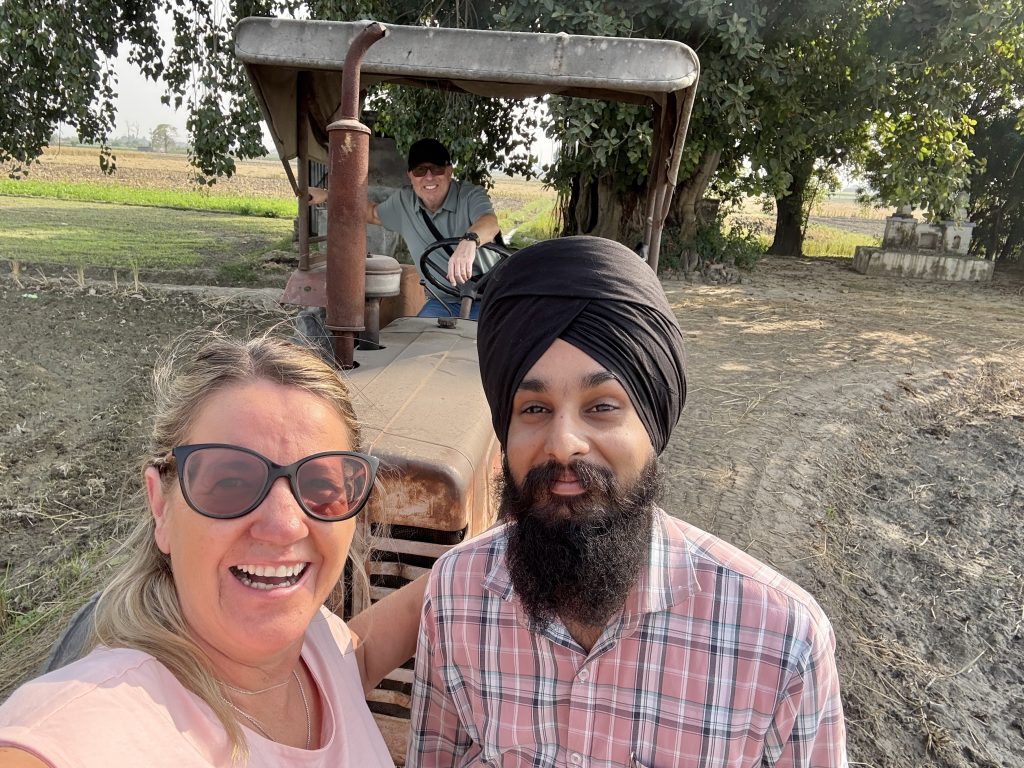
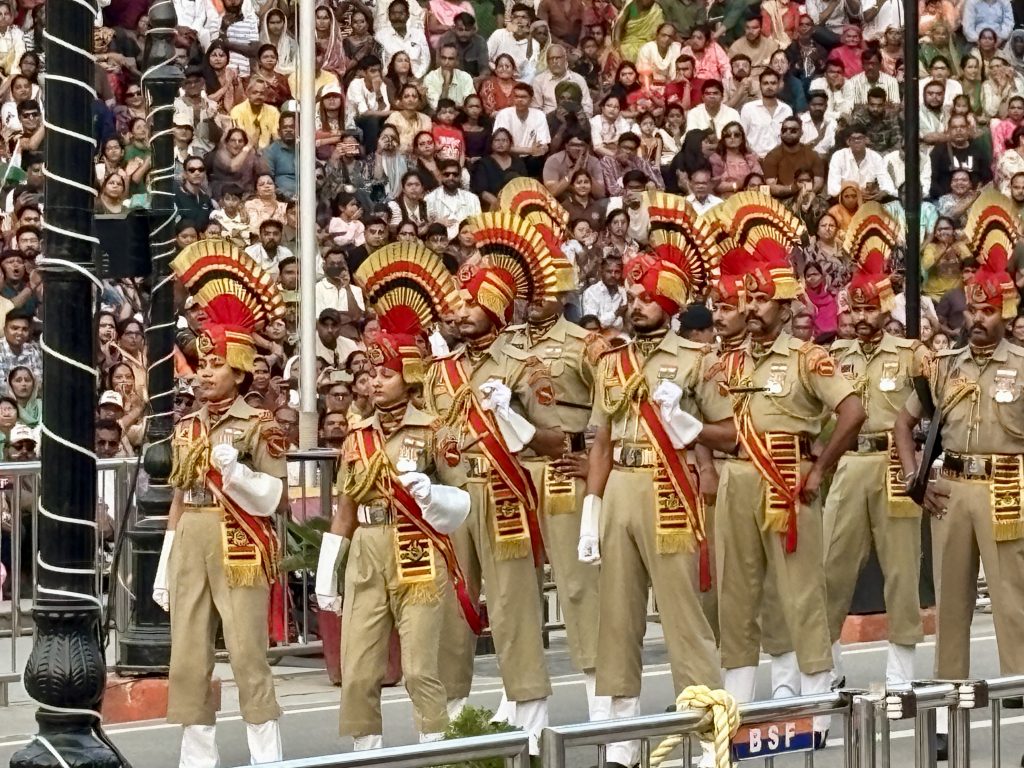
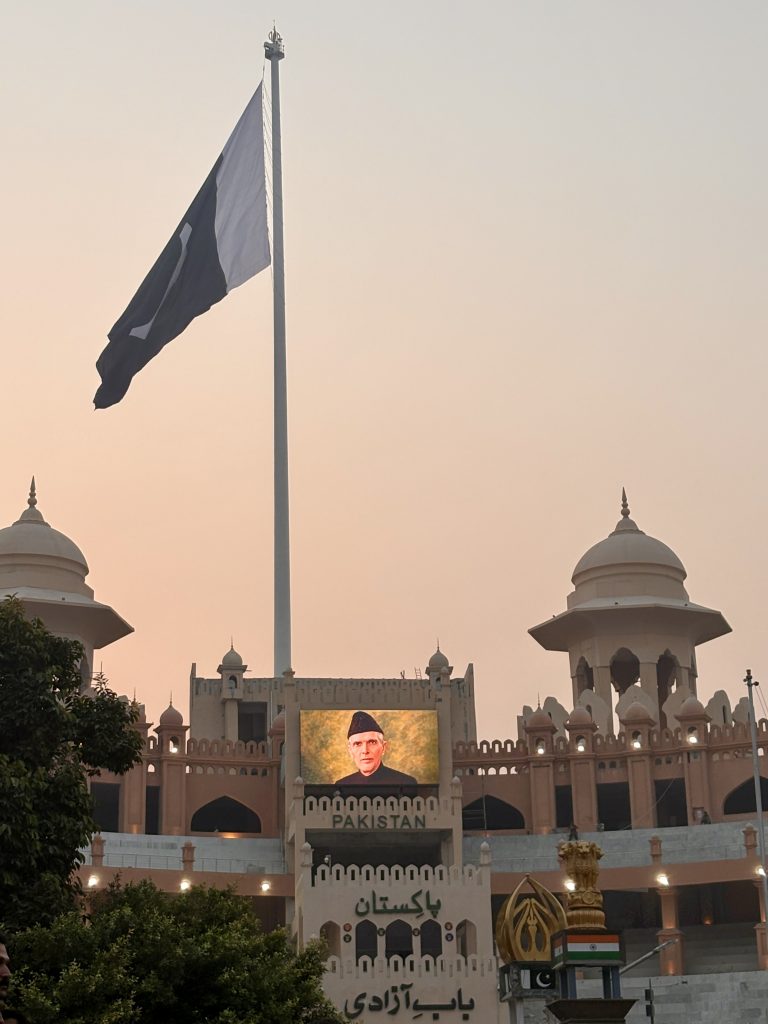
In the afternoon we drove out to a local village and visited a farm, where Ram explained the farming methods and techniques in the Punjab, took a vintage tractor into the fields to see the everyday way of life and crops currently being grown. Back to the farm, we were served a homemade vegetarian lunch (yes more curry). All the ingredients, except the spices were from local farms. By late afternoon we had to leave for the drive to our final and eagerly anticipated experience in Amritsar. The flag lowering ceremony at the Wagah border between India and Pakistan. It’s a daily, hour-long “beating retreat” performed by India’s Border Security Force (BSF) and Pakistan’s Pakistan Rangers. Soldiers from both sides perform synchronised drills, high kicks and marching. The crowds on both sides of the fence are encouraged to cheer for their own soldiers and wave their national flags, creating a lively, competitive atmosphere. The ceremony ends with both flags being lowered at sunset. With that our Amritsar adventure was over, the next day we headed back to Dehli to spend our last three nights in India.